If water is coming in right now
- Check that the pump is plugged in and the GFCI outlet hasn't tripped (press reset).
- Check the breaker panel.
- Look at the float. If it's caught on the pit wall or the cord, freeing it may get the pump running.
- If none of that works, call rather than using the form so it can be treated as urgent.
Never reach into a sump pit with the pump plugged in.
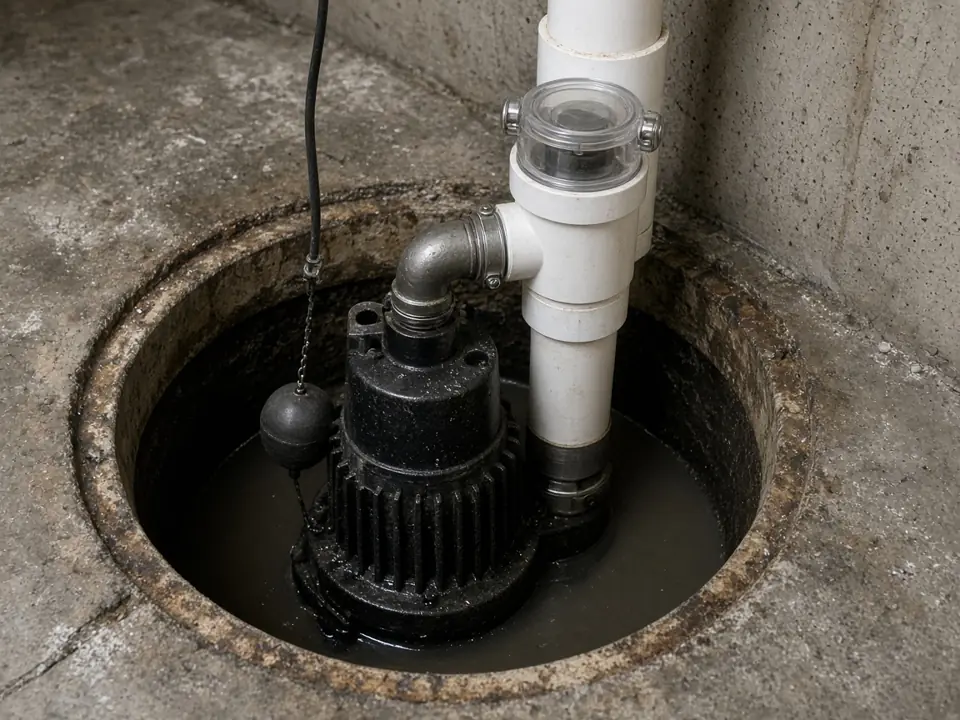
Common problems and causes
| What you notice | Likely causes |
|---|---|
| Runs nonstop | Stuck float switch, failed check valve (water falls back), undersized pump, very high water table |
| Turns on and off every few seconds | Float set too tight, missing or broken check valve, pit too small |
| Hums, no water moves | Jammed impeller, blocked or frozen discharge, failing motor |
| Never turns on | No power, tripped GFCI, dead float switch, burned-out motor |
| Loud rattling or grinding | Worn bearings, debris in the impeller, loose pipe |
| Water around the pit but pump runs fine | Pump can't keep up, or water is getting in somewhere else (see wet basements) |
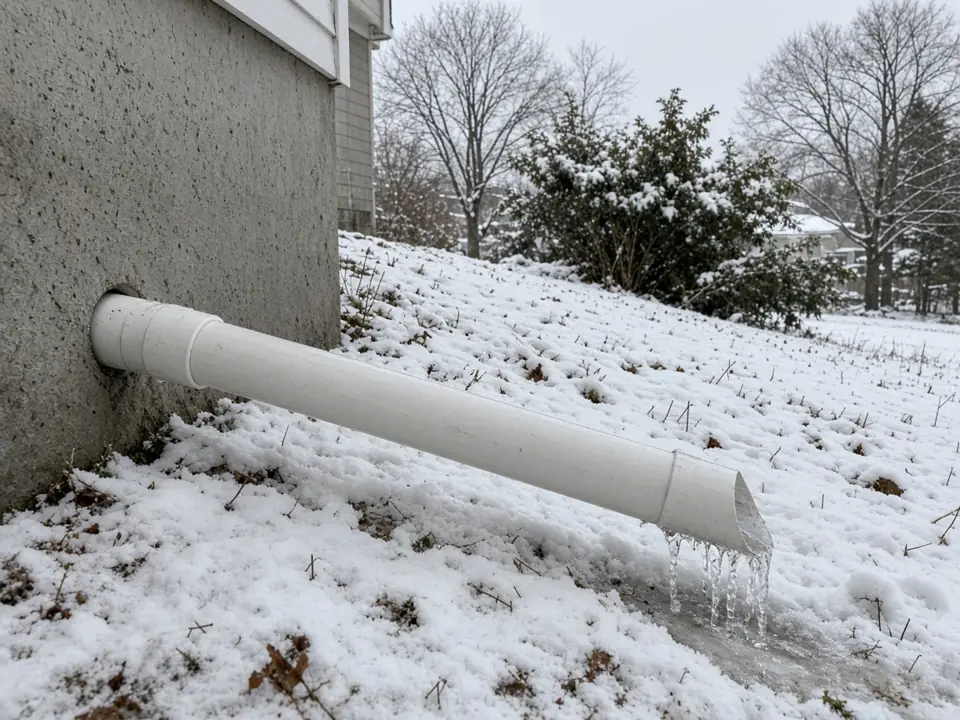
Frozen discharge lines
In January and February, a pump that runs but doesn't empty the pit often has an iced-up discharge line outside. Lines that run flat, sag, or end in a buried pipe are most likely to freeze. A contractor can re-slope the line, shorten the exposed section, or add a freeze-protection fitting that lets water escape near the house if the line downstream is blocked.
Replace before it fails
Pumps typically last 7–10 years, less if they cycle hard every spring. Rust, mineral crust on the housing, a pump that sounds louder than it used to, or one you can't date are all good reasons to replace it in fall or winter instead of during the March thaw. Replacing the check valve at the same time is cheap and common.
Simple maintenance (every 3–4 months)
- Slowly pour a bucket of water into the pit and make sure the pump starts, empties the pit and shuts off.
- Clear debris, gravel and silt from the pit and the pump's inlet screen.
- Make sure the float moves freely and the cord isn't in its way.
- Walk outside and confirm water is actually leaving the discharge and running away from the house.
- Test the backup pump and alarm too, if you have them.
Typical repair and replacement costs
| Job | Typical estimate |
|---|---|
| Service call and diagnosis | $100 – $250 |
| Float switch or check valve replacement | $150 – $400 |
| Replace pump in an existing pit | $350 – $900 |
| Heavy-duty cast-iron pump replacement | $600 – $1,200 |
| Re-run or freeze-proof the discharge line | $200 – $800 |
All prices are typical West Michigan estimates for planning only. Your actual price depends on your basement, the equipment you choose and the contractor's on-site estimate.
Repair questions
Should I repair or replace my sump pump?
If the pump is under about 5 years old and the problem is a float switch, check valve or clog, a repair usually makes sense. If it's 7+ years old, the motor is failing, or it can't keep up in heavy rain, replacement is usually the better value, since a failed pump in April can cost far more than the pump.
Why does my sump pump hum but not pump water?
Common causes are a jammed impeller (debris, gravel or mineral build-up), a frozen or clogged discharge line, a stuck check valve, or a failing motor. Unplug it before you look in the pit.
Is it normal for my sump pump to run when it isn't raining?
In spring and after big storms, yes, because clay soil keeps feeding groundwater to the pit for days. Running constantly in a dry spell usually points to a stuck float, a bad check valve letting water flow back, or the pump being too small.