Signs you need a sump pump
- Water seeps in at the floor-wall joint or up through floor cracks after heavy rain or snowmelt.
- Your floor drain backs up or water pools near it every spring.
- You're finishing the basement and want protection before drywall and carpet go in.
- Your home sits low, near a creek, or neighbors on your street all run pumps.
What a good installation includes
The pit (sump basin)
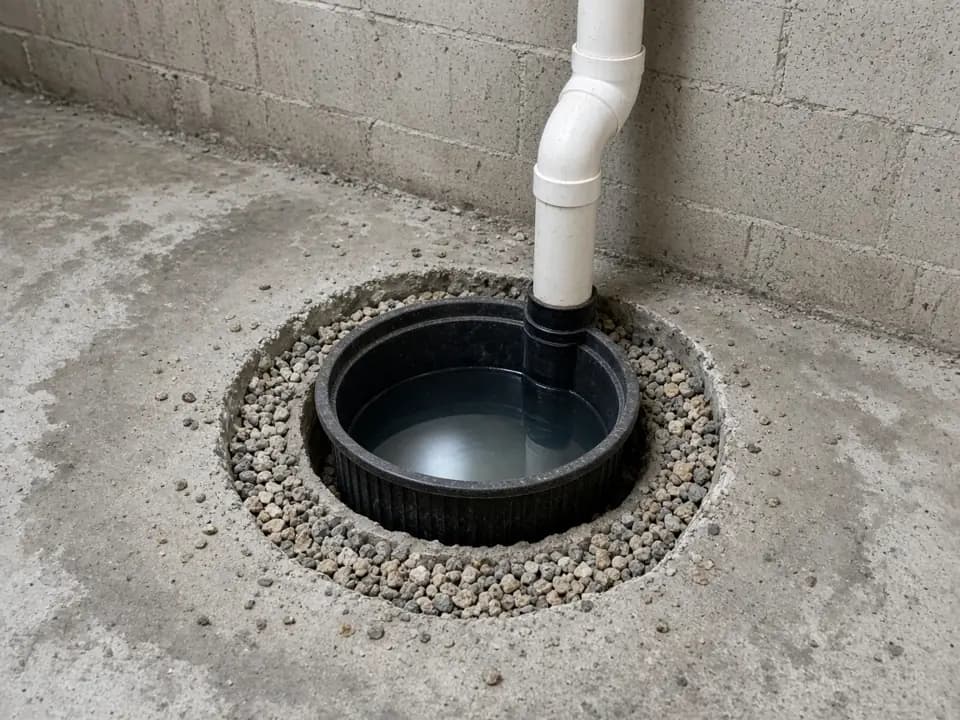
The contractor cuts the concrete floor at the lowest practical point, digs down and sets a plastic basin, usually 18–24 inches wide and about 24–30 inches deep, in a bed of gravel. A perforated basin lets groundwater flow in from below. Ideally the pit connects to drain tile around the inside of the foundation so water is collected before it reaches the floor. In clay soil, the pit may fill fast. That's a sign it's doing its job, but it also means the pump has to be sized for it.
Pump type
- Submersible: sits in the pit, quieter, moves more water, and the pit can be sealed with a lid (which helps with radon and humidity). This is the usual choice for finished basements and wet lots.
- Pedestal: the motor sits on a column above the pit. It costs less, is easy to service and fits narrow pits, but it's louder and better suited to light or moderate flow.
- Cast iron vs. thermoplastic: cast-iron housings shed motor heat into the water and tend to last longer under heavy cycling. Thermoplastic pumps are lighter and cheaper and are fine for lower-demand pits.
Horsepower
Most Grand Rapids homes need 1/3 HP or 1/2 HP. Bigger isn't automatically better: an oversized pump short-cycles and wears out faster. Sizing should be based on how fast the pit fills in a heavy rain and the "head," meaning how high and how far the water has to travel to get outside. Pumps rated around 2,000–3,000 gallons per hour at a 10-foot lift cover most homes here.
Check valve and discharge line
A check valve on the discharge pipe keeps the water in the pipe from falling back into the pit every time the pump shuts off. Without one, the pump re-pumps the same water and wears out sooner. The discharge line, usually 1-1/2 inch PVC, should exit the house, slope downhill and empty at least 10 feet from the foundation, or into a properly built drain where your city allows it. Michigan winters freeze water that sits in a flat or sagging line, so ask about a freeze-protection ("ice guard") fitting near the exit.
Power and alarm
The pump should be on its own GFCI-protected outlet, not an extension cord. A $20–$40 high-water alarm is cheap insurance, and it's also a good time to talk about a battery backup.
Typical installation costs
| Job | Typical estimate |
|---|---|
| New pit, liner, submersible pump, check valve and discharge | $1,500 – $3,500 |
| Adding a dedicated outlet | $150 – $400 |
| Interior drain tile tied to the pit (per linear foot) | $50 – $100+ |
| Battery backup added at install | $800 – $2,000 |
All prices are typical West Michigan estimates for planning only. Your actual price depends on your basement, the equipment you choose and the contractor's on-site estimate.
Installation questions
How long does a new sump pump installation take?
Usually one day for a standard install: cutting the floor, digging the pit, setting the liner and pump, and running the discharge. Adding drain tile along the walls can take several days.
Do I need a permit to install a sump pump in Grand Rapids?
It depends on the work. Plumbing or electrical changes, such as a new dedicated outlet, may need a permit from the City of Grand Rapids or your township. A licensed contractor will know what your city requires and pull the permit if one is needed.
Can the sump pump drain into the sewer?
Generally no. Grand Rapids and most surrounding cities don't allow sump pumps to discharge into the sanitary sewer, because clean groundwater overloads the treatment system. Discharge normally goes outside, away from the foundation, or to a storm connection where the city allows it.